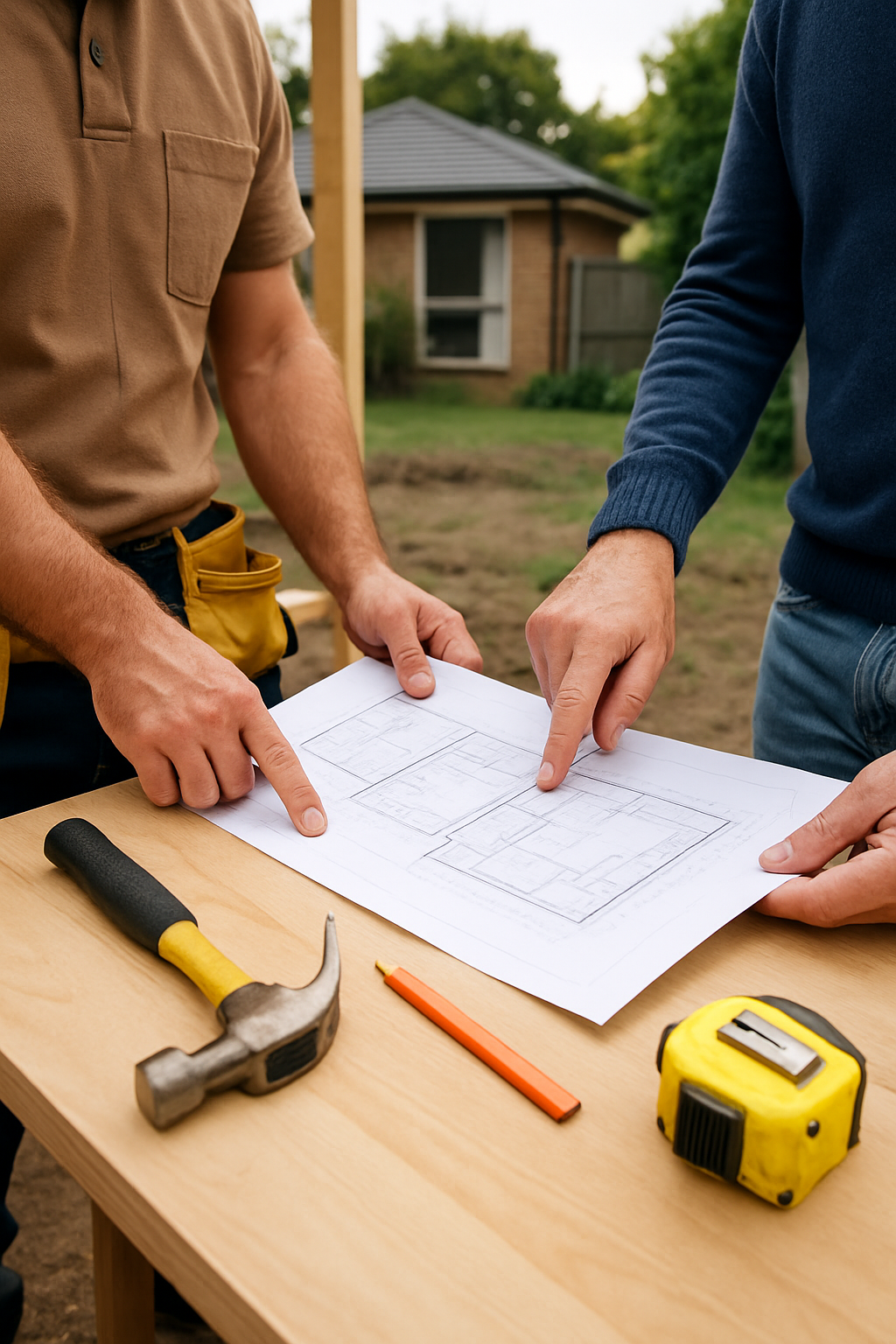
Australian backyards are built half by professionals and half by DIYers. Some of the DIY jobs end up better than what a builder would have done. Some of them cost more in repairs by year three than hiring a pro would have cost upfront.
The honest answer to “should I DIY this?” depends on three things: the legal status of the work, the failure cost if it goes wrong, and your actual skill level (not your assumed skill level). Here is how to think about it.
Things you legally cannot DIY
Forget DIY for these — Australian regulations restrict them to licensed trades regardless of your skill:
- Electrical work beyond replacing like-for-like fixtures
- Plumbing connected to mains (taps and drains beyond simple flex hose work)
- Gas fitting (any gas connection or modification)
- Roof tiling in some councils, structural roof work generally
- Asbestos removal of any quantity
- Working at heights above 2m on commercial-spec scaffolding
Fines are significant, insurance won’t cover damage from non-compliant work, and you can void your home warranty. None of these are negotiable — this is licensed trade territory.
Things that are smart DIY for most people
These are within reach for someone with basic tool skills and patience, and the failure cost if you do them poorly is low:
Painting fences and timber surfaces. Slow, tedious, but technically straightforward. Buy decent paint, prep the surface properly, accept that it’ll take a long weekend. Save: $1,000-$3,000.
Garden bed construction. Sleeper retaining walls under 600mm, raised vegetable beds, simple timber planters. Watch one or two YouTube videos, source materials from a hardware big-box, give it a weekend. Save: $500-$2,000.
Planting and basic landscaping. Choosing plants suited to your aspect and soil, planting them at the right depth, mulching, watering. Beats paying a landscaper $80/hour to do what’s effectively gardening. Save: $1,500-$4,000 on a typical small yard.
Simple paving. Laying concrete pavers on sand for a small path or seating area. Forgiving — if you don’t quite get the level right, you can lift and re-set without permanent damage. Save: $1,000-$3,000.
Installing flat-pack gazebos, sheds, and pergola kits. Following instructions carefully. Add 50% to the time the manual claims. Save: $1,500-$4,000 vs paying for installation.
Things that look DIY-able but usually aren’t
These are the ones that catch DIYers — they look manageable, the YouTube tutorials make them seem doable, but the failure mode is expensive:
Decking with timber to a good standard. The carpentry isn’t too hard. The waterproofing, the bearer/joist sizing, the hidden fasteners, the long-term board movement — those are where DIY decks fail by year five. Save attempt: $3,000-$5,000. Repair cost when it fails: $8,000-$15,000.
Tiling outdoors. Indoor tiling is forgiving. Outdoor tiling has to handle thermal expansion, water shedding, and movement joints. DIY outdoor tile jobs typically fail within 2-3 years. Save attempt: $1,500-$3,000. Replacement cost: $5,000-$8,000.
Concrete slabs over 4m². Mixing, pouring, and finishing concrete to a level standard at any scale is genuinely hard. Small concrete failures look amateur (uneven surface, hairline cracks, poor edges) and are very hard to fix. Save attempt: $1,500-$2,500. Re-pour cost: $3,500-$6,000.
Retaining walls over 1m high. Over 1m typically needs engineering certification. Below that, drainage and footing details are critical. DIY retaining walls that fail can cause significant property damage. Engineering fix after failure can be 5x the original quoted cost.
The honest skill assessment
Before deciding to DIY, three honest questions:
1. Have you done something similar before? Not “watched a video,” but actually completed a project of similar complexity. If no, your time estimate is probably 50% off.
2. Do you have the tools, or budget for them? A small build often needs $300-$1,000 of specialist tools. If you’re buying for one job, the tool cost eats most of the savings.
3. What does the worst-case failure cost? Painting fences badly = repaint. Building a deck badly = structural rebuild. Different stakes, different decisions.
The hybrid approach most people miss
Often the right answer is neither full DIY nor full pro: hire a tradie for the structural / specialist parts, do the finishing yourself.
Examples:
- Tradie pours the slab and frames the pergola; you paint, fit non-structural decorative elements
- Tradie does the structural work and waterproofing of an alfresco; you tile (after they prep the substrate properly)
- Tradie builds the retaining wall (engineered properly); you handle the planting and finishing
- Tradie installs the deck structure; you handle the staining and finishing every couple of years
This hybrid often gives the best ROI: pay the pro for what they do best (the bits that are dangerous or have the biggest failure cost), do the parts that are tedious but forgiving yourself. Same outcome, often a third of the cost of full pro install, much better than full DIY.
The skill is knowing which bit is which.
Comments are closed