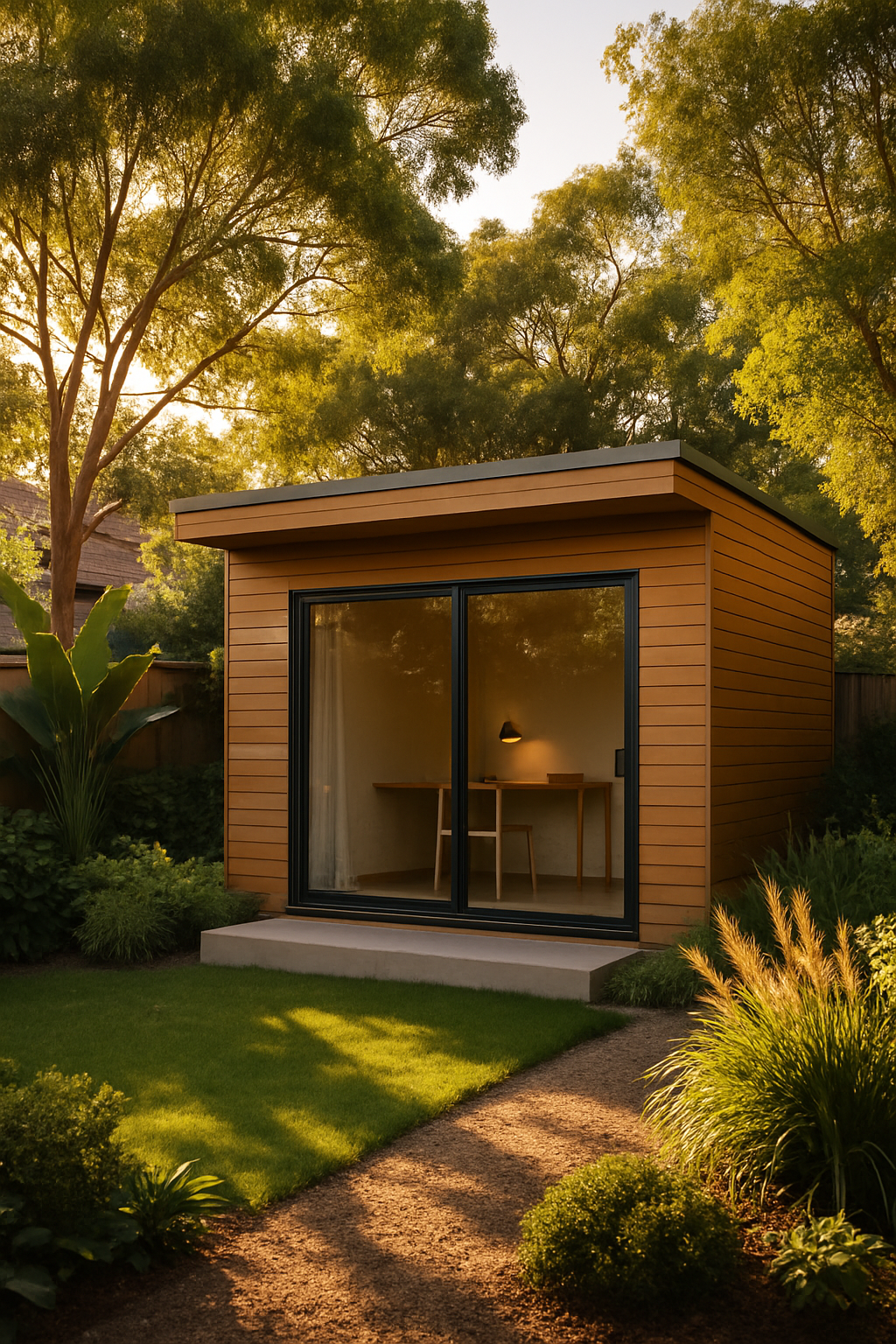
Working from home in Australia got serious during 2020 and never went back. The result: thousands of suburban backyards now have detached work studios, granny flats turned offices, and converted sheds. Some of them work brilliantly. Many don’t.
The difference is rarely the size or the spend. It’s whether the layout actually fits how you work. A 9m² studio with the right layout beats a 16m² studio with the wrong one. Here is what makes the difference.
Light first, everything else second
The single biggest design decision is window placement. Get it wrong and you’ll be squinting at your screen by 2pm or freezing in winter mornings. Get it right and you barely notice the studio is dependent on the weather.
Position your desk so the window is to your side, not behind you and not in front of you. Window behind you = glare on the screen during video calls. Window in front of you = you stare into the sun all afternoon.
South-facing windows in Australia get consistent indirect light all day — the most useful orientation for a work space. North-facing gets direct sun (which you can manage with awnings or external blinds). East gets harsh morning sun. West is brutal in summer afternoons.
If you can choose your studio’s orientation, prioritise: south wall for desk, north wall for storage, east or west for entry door.
Climate control matters more than you think
A studio without proper insulation and aircon is unusable for half the year in Brisbane. Summer afternoons hit 35°C+ inside an uninsulated tin shed. Winter mornings drop to 10°C inside until the heater catches up.
What actually works:
- Proper wall and ceiling insulation (R2.5 minimum for walls, R4.0 for ceiling)
- Reflective sarking under the roof — significantly reduces summer heat gain
- Split system air conditioner sized for the space (1.5kW for spaces under 12m², 2.5kW for 12-18m²)
- Cross-ventilation — operable windows on opposite walls for spring/autumn use without aircon
- Ceiling fan — extends the temperature range where you don’t need aircon
The single most underrated feature: a quality ceiling fan with a remote. Costs maybe $300 installed. Massively extends comfortable working hours without aircon running.
Storage — the difference between studio and glorified shed
Studios get cluttered fast. The desk becomes overflow storage, the floor becomes filing, the spare chair becomes a permanent stack of stuff. Within months, what was meant to be a clean work environment looks worse than the office you were trying to escape.
Build storage in from the start, not after. Wall-mounted shelving frees floor space. A built-in wardrobe-style cabinet on one wall (with mix of shelves, drawers, hanging) holds documents, equipment, and the random bits a working life accumulates. Cost is $1,000-$3,000 for a custom built-in vs $500-$1,500 for freestanding furniture — but the built-in saves significant floor space and looks intentional.
Tech infrastructure — get this right or regret it daily
The two most-regretted skipped items:
1. Hardwired internet (Cat6 ethernet from the house). WiFi from the house often drops a third of its bandwidth by the time it reaches the studio across the yard. Hardwired ethernet via direct-buried cable is $300-$800 to install during construction. The same retrofit later through finished walls is $1,500+ and disruptive.
2. Power for everything you actually use. Spec at least 8 power outlets in a small studio: desk (×4 — laptop, monitor, dock, phone), printer, lamp, secondary device, future-proofing. Most studios get built with 4-6 and the rest become powerboards on the floor.
Pre-cable for future security cameras and doorbell — empty conduit costs nothing to install, retrofit costs $400+.
The one comfort upgrade most people skip
Acoustic treatment. A small studio has hard surfaces everywhere — bare walls, hard floor, glass windows. Voice calls echo, clicking keys reverberate, and the whole space feels clinical.
The fix costs $200-$500: a rug under the desk, fabric curtains rather than blinds, an acoustic panel or two on one wall. Massive subjective improvement. The space goes from feeling like a converted shed to feeling like a proper office.
Budget reality check
For a properly built backyard studio in Brisbane in 2026:
- Basic prefab kit-form studio (10-12m²): $15,000-$25,000 installed
- Custom-built proper studio with insulation, aircon, ethernet, built-in storage: $30,000-$55,000
- Full granny-flat-spec studio (kitchenette, bathroom): $80,000-$130,000
If you’ll use the studio for years, the gap between “kit shed with a desk” and “proper studio” is genuinely worth the difference. Skipping the insulation, aircon, and hardwired ethernet to save $5,000 means the space gets used 6 months a year instead of 12 — and the per-month cost of using it works out higher, not lower.
Comments are closed