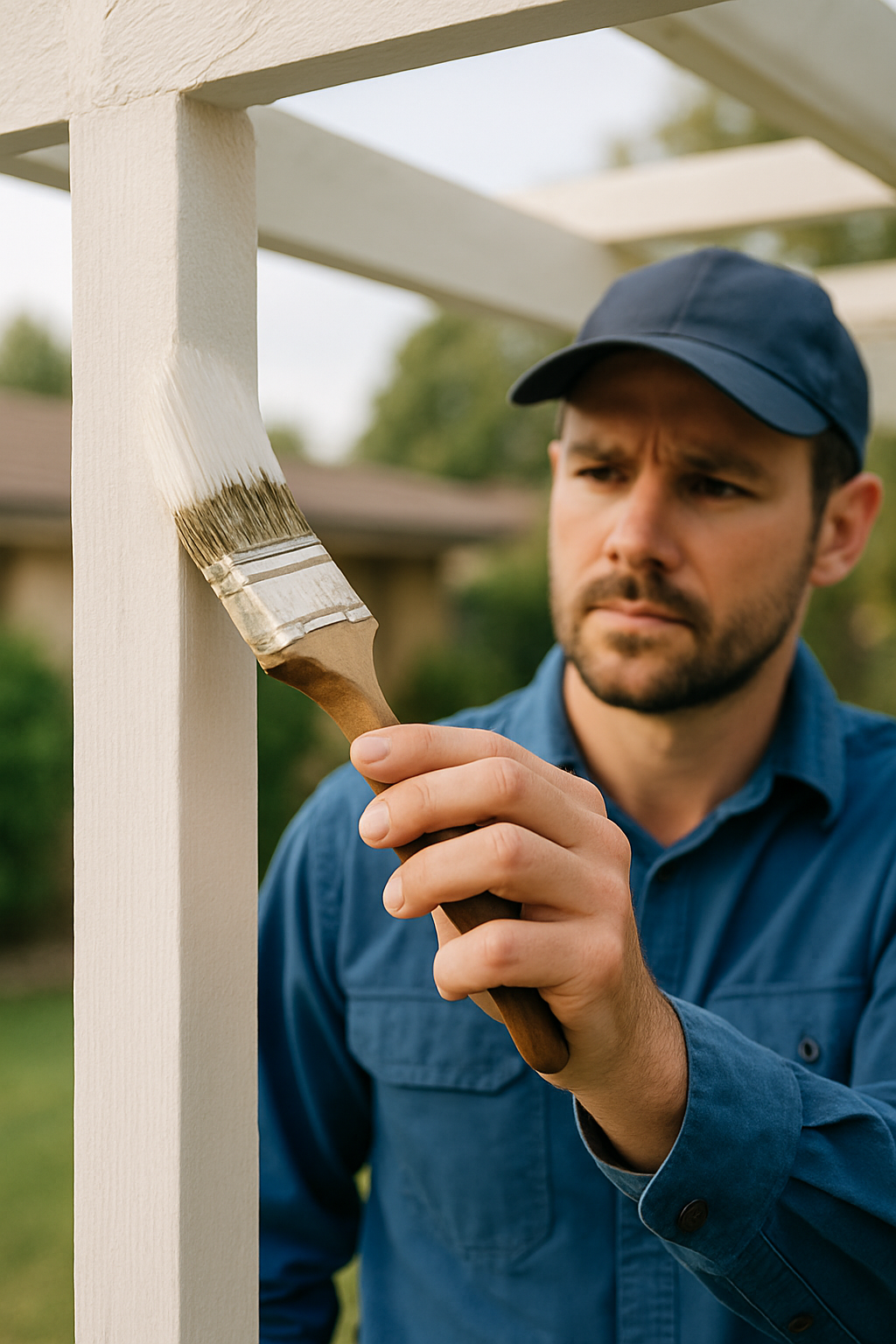
Painted outdoor structures in Australia age fast. Sun, humidity, salt spray (if you are coastal), and the seasonal swing between scorching summer and damp winter all attack paint. The wrong product fails within twelve months — peeling, chalking, fading, or all three. The right product holds up for ten years.
The difference is not just price. It is matching the paint to the surface, the climate, and the way the structure will be used. Here is what actually performs.
Timber pergolas, decks, fences
Treated pine and hardwood both move with humidity, so the finish needs to be flexible. The choices:
Decking oil — penetrates rather than sits on top. Best for foot traffic surfaces (decks, stair treads). Doesn’t peel. Reapply every 12-18 months. Cheapest long-term option.
Solid stain — deeper colour than oil, still flexible. Suits pergola posts, fences. Lasts 4-7 years before recoat.
Exterior paint — full opaque colour. Best appearance but the highest maintenance — peels at any moisture entry point. Reserve for elements that don’t get wet (covered pergola beams, fence panels in dry areas).
What to avoid on timber: interior paint, regular wall paint, anything not specifically labelled exterior. Quality marine-grade products are worth the premium for high-exposure areas.
Steel and aluminium structures
Modern carports, pergola posts, and outdoor frames are often Colorbond or powder-coated steel. These come finished from the factory and don’t need painting in normal use. If they get scratched or fade, the right answer is touch-up paint matched to the original colour, not a full repaint.
If you genuinely need to paint metal: clean with sugar soap, sand any loose paint, prime with a metal-specific etch primer, then two coats of exterior enamel. Skip the prime step and you will see flaking within a season.
Concrete patios, render, and masonry
Painted concrete is high-risk in Australia. Hot summers expand the slab, cold mornings contract it, and any moisture from below the slab pushes paint off from underneath. The patio paint that looks great in year one is often peeling badly by year three.
Better options:
- Concrete sealer — clear or tinted, soaks in, doesn’t peel. Best for outdoor patios.
- Acid-etched stain — colours the surface chemically rather than coating it. Permanent finish.
- Exterior masonry paint — only on render or block walls (not horizontal slabs). Choose alkali-resistant formulations.
Why DIY repaints fail more than they succeed
The two failure points are surface preparation and weather window. Both are easy to underestimate.
Preparation: every paint label says “clean and sand” but the actual standard is “remove all loose material, sand back to a sound surface, fill any cracks, prime any bare spots.” That is half a day for a small structure, two days for a deck. Skip it and the paint comes off the old layers, not bonded to the substrate.
Weather: paint cures across multiple days, not minutes. If overnight temperatures drop below 10°C or humidity spikes overnight, the cure is compromised. A perfect Saturday is fine until the Sunday morning is cold and damp.
This is why outdoor painting jobs that look uneven, blotchy, or peel within a year often weren’t applied poorly — they were applied at the wrong moment.
When to bring in a professional
For decking maintenance and fence touch-ups, DIY is fine if you have a clean weather window and proper prep. For larger jobs — full pergola repaints, multi-storey eaves, anything involving access equipment, or structural elements where failure has real cost — get a painter who specialises in exterior work and Australian conditions.
If you are based in Brisbane Redlands or the Bayside suburbs, Barton’s Painting and Decorating handles exterior work including pergolas, eaves, and outdoor structures using exterior-grade products specced for Australian conditions. Their bread-and-butter is exterior repaints that survive ten Australian summers, not Instagram-pretty interior makeovers — different skill set.
Comments are closed