Anyone who has spent a Brisbane summer on an unshaded backyard deck knows shade is not optional. The question is which kind. The three main choices — pergolas, awnings, and shade sails — solve the same problem in genuinely different ways. The right one for your house is rarely the cheapest one.
Here is how each one actually performs in Brisbane conditions, what they cost, and what to ask for.
Pergolas — the long-term answer
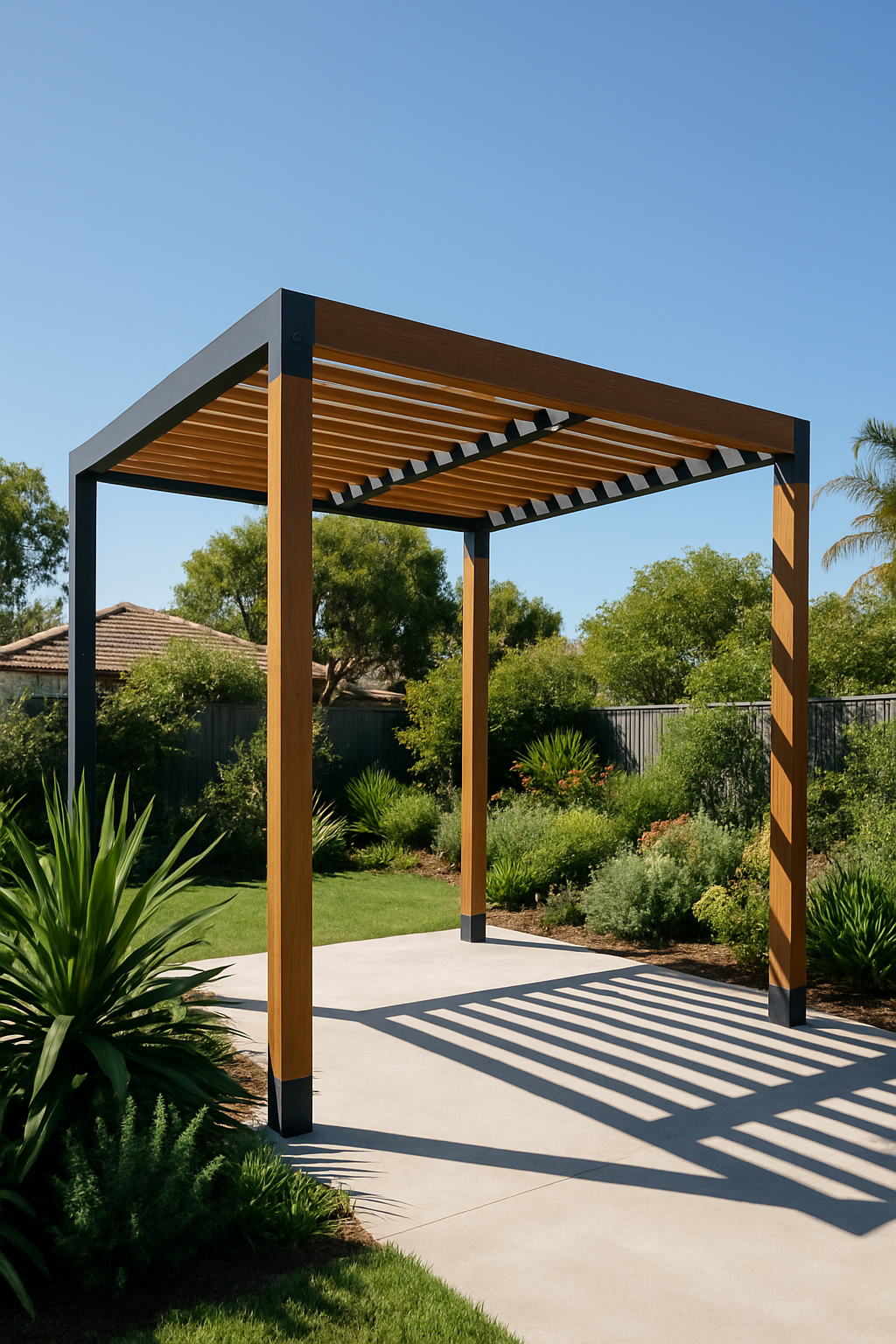
A pergola is a permanent structure with posts and a top frame, optionally with a solid roof, louvres, or a covered material. They suit Brisbane homeowners who want shade, want to entertain regularly, and want the outdoor space to feel like an extension of the home.
Best for: regular outdoor entertaining, all-weather use, increasing property value, integrating with future outdoor kitchen or fireplace.
Cost in 2026 Brisbane: $4,000-$8,000 for a basic timber pergola, $8,000-$18,000 for a roofed pergola with louvres, $15,000-$35,000 for a custom integrated structure with electricity and ceiling fans.
Approval: council DA usually required for anything over 10m² or attached to the house. Smaller stand-alone units may be exempt — check with your local council before paying for plans.
Lifespan: 15-25+ years if built well. Outlives most other backyard investments.
Pergolas Brisbane handles custom pergola design and build across Brisbane, Redlands, Logan, Ipswich, and the Gold Coast — including roofed designs, louvres, and integrated outdoor structures. Worth getting a quote even if you are early-stage and weighing your options.
Awnings — flexible shade with one important limit
Retractable awnings extend out from the house wall, providing shade when you want it and folding away when you don’t. They suit Brisbane homes where the outdoor area is small (under 4m × 4m) or where the alfresco is right against the house wall.
Best for: small balconies, narrow rear yards, anywhere you want flexibility. Useful in winter when you want sun and summer when you want shade.
Cost: $1,500-$4,000 for manual operation, $3,500-$7,500 for motorised with wind sensor. Wind sensor is worth the upgrade in Brisbane storm season.
Important limit: awnings are NOT designed for permanent extension during heavy weather. Wind gusts above 50-60km/h can damage them or rip them off the wall. The motorised wind sensor automatically retracts when wind exceeds preset limits — without it, you risk damage during summer storms while you’re at work.
Lifespan: 8-12 years for the fabric, 15+ for the frame. Fabric is replaceable.
Shade sails — fast and cheap, but not low-maintenance
Shade sails stretch tensioned fabric between fixing points (poles, walls, or trees). They are the fastest and cheapest way to shade a large area.
Best for: shading pools, kids’ play areas, large grass yards, situations where flexibility matters more than weather-tightness.
Cost: $400-$1,500 for a kit-form sail you install yourself, $1,500-$4,500 for professional install with proper post anchoring.
The catch most people miss: shade sails do not provide rain shelter (water pools and pours through unless you choose specific waterproof PVC fabric — heavier, more expensive, less flexible). They also need to be removed for storms — the same wind that snaps awnings will destroy a sail. Many homeowners discover this in their first storm season and end up with a torn sail and a damaged post.
Lifespan: 4-7 years for cheap sails, 8-12 years for premium. Fabric degrades from UV regardless of brand.
The decision framework
Three honest questions:
- Will you use the space year-round, or just during summer? Year-round = pergola.
- Is there an existing wall to attach to, or do you need a free-standing structure? Wall = awning option opens up.
- Do you want it to be a feature of the property, or just shade? Feature = pergola; just shade = sail.
The cheap option is rarely the right one. A $1,500 shade sail that needs replacing every 5 years and has to come down every storm season costs more in 15 years than a $12,000 pergola that lasts 25. But if you rent, can’t get approval, or only need shade for a season, the sail is the right call.
Get quotes for at least two of the three options before you commit. The cost difference is often less than you’d expect, and the quality-of-life difference between cheap and right is significant.
Comments are closed