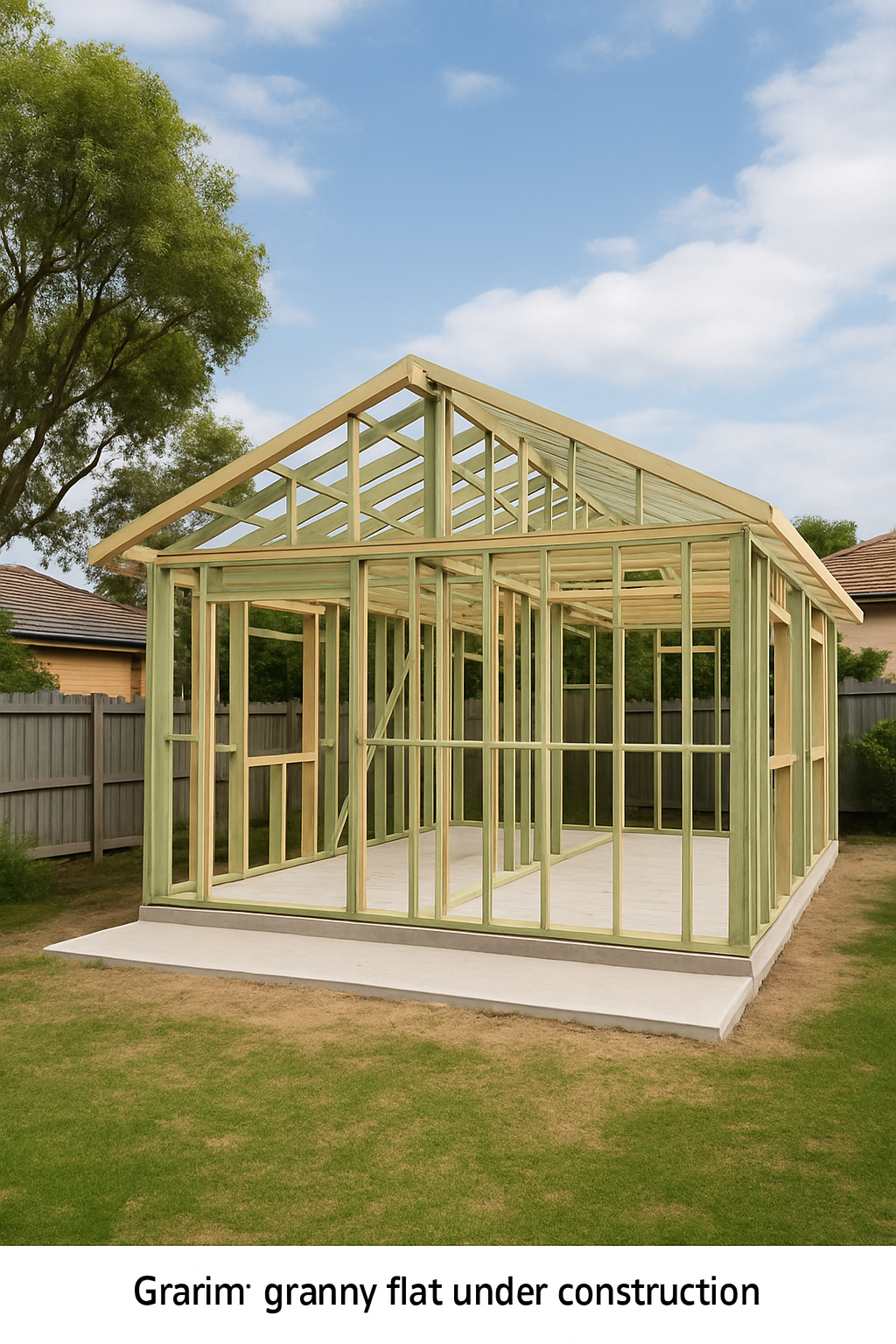
People building a granny flat tend to think the design choices are the late-stage stuff — pick the kitchen, choose the bathroom tiles, done. By that point most of the important decisions are already locked in by the slab, the rough-in, and the council approval. Get the early-stage stuff wrong and you will be living with the compromises for as long as the granny flat stands.
Here is what actually has to be decided before construction starts, not in week six when it is too late to change.
Council approval — the timeline that catches everyone
Most Australian councils now require either a Development Application (DA) or a Complying Development Certificate (CDC) for granny flat builds, depending on the state. NSW often allows CDC for compliant designs, which is faster — typically two to four weeks. A full DA is six to twelve weeks plus, sometimes longer in heritage zones or flood-prone areas.
Before you commit to a builder, lock down which approval path applies to your block. Setbacks, height limits, site coverage, and overlooking rules vary between councils and even between zones within a council. The biggest avoidable mistake: ordering plans before you have confirmed the council pathway. Plans that worked for your neighbour three years ago may not work for your block today.
Plumbing and drainage — locked at slab stage
The drainage points for the kitchen sink, bathroom, laundry (if any), and the connection back to the main house all come up through the slab. Once concrete is poured, moving them is destructive. Decide before pour:
- Bathroom layout — toilet position, vanity drain, shower drain
- Kitchen sink position — wall-mounted or island
- Whether to include a laundry (washer/dryer drainage doubles your plumbing complexity)
- Where the granny flat connects to the main sewer line
- Hot water service location and the pipe run from there
If the main house has its own hot water at capacity, the granny flat usually needs its own unit. That is a separate gas or electrical decision that flows back to the design.
Electrical — locked at frame stage
Standard granny flat electrical assumes a basic load: bedroom, living, kitchen, bathroom. Things that change the spec significantly:
- Air conditioning (split system needs dedicated circuit + outdoor unit clearance)
- Induction cooktop (32-amp circuit if main meter has capacity)
- Whether the unit will be metered separately (ideal for tenanted granny flats)
- Outdoor lighting and security cameras
- EV charging at the granny flat (planning ahead is much cheaper than retrofitting)
The biggest miss: not specifying enough power outlets. Most builds spec the bare minimum — kitchen, fridge, lounge, bedroom — when you actually want at least double that. Adding outlets after frame closes means cutting plaster.
The builder coordination question — actually the biggest one
Granny flats fail more often on bad coordination than bad design. The slab guy needs to be ready when the plumber’s rough-in is done. The frame goes up only once the council inspection passes. The cabinet maker needs measurements only once the wall sheeting is on, but they need 4-6 weeks lead time. The electrician comes in before insulation, the plumber after.
If your builder is running this well, you do not see any of it. If they are running it badly, you become the trade coordinator and get tradies blaming each other for delays. Iconic Homes and Construction handles new builds and granny flat projects across Brisbane and the Gold Coast with trade coordination kept in-house — meaning the trades hit their dates instead of you chasing them down. Worth talking to before you sign with anyone who sub-contracts the project management out.
Realistic budget and timeline
A standard 2-bed granny flat in 2026 Australia: $130,000 to $180,000 build cost, plus council fees ($3,000-$8,000), plus utility connections ($2,000-$10,000 depending on existing services). Timeline is 16 to 24 weeks from approval to handover.
Anyone quoting under $100,000 is either using bottom-tier finishes or has not factored in something significant. Anyone promising 12 weeks for a full custom build is over-promising. Honest timelines and honest quotes are the trade-off you want — and the question to ask every builder before you sign: “what happens if approval takes 8 weeks instead of 4?” The answer tells you whether they have built this before.
Comments are closed